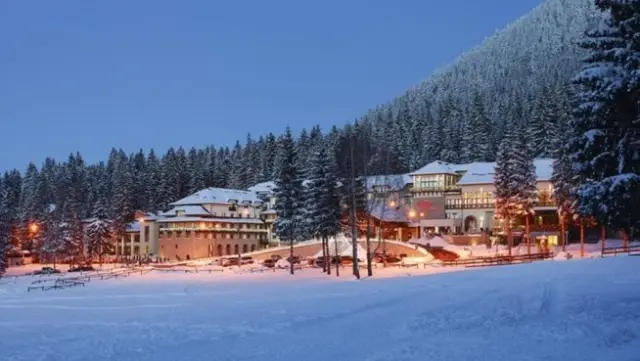
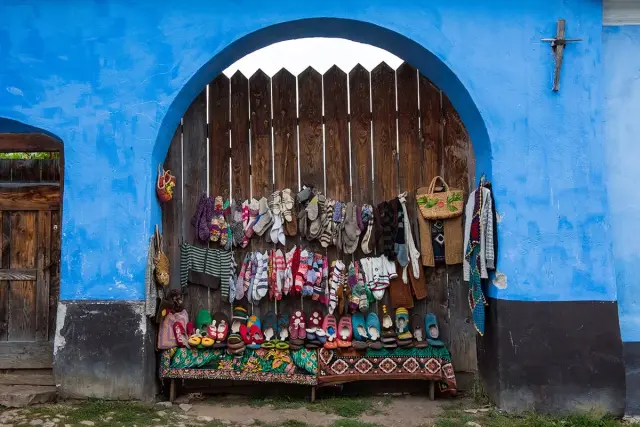
Brașov County is considered one of the most precious jewels of Transylvania, which besides spectacular scenery has a number of historic and other tourist attractions.
In Prejmer, just 15 km from the historic city of Brașov, you can discover one of the sights on the UNESCO World Heritage list, the fortified church complex, an undeniable testimony to the tradition of the Transylvanian Saxons.
It is considered the oldest historic monument in Brașov and also one of the best-preserved fortifications in Europe. Indeed, the church in Prejmer is the only place in our country that has been awarded three stars in the Michelin travel guide.
Construction of the fortress that shelters the village’s fortified church began as early as 1211, by the Teutonic Knights, as a defence strategy against Turkish invasions. The fortress is circular, surrounding the church, with walls 12 metres high and 3-4 metres thick. In those days the average height of defensive structures was about 10 metres, which is why the church towers rise only a little above the wall. Bastions rise at intervals, the gates are made of iron, and the fortress can be entered only by drawbridges.
The defensive wall of the fortress was crowned by a corridor along which several people could walk abreast, reached from the upper rooms.
During the fighting with the Turks, the fortress was attacked 50 times and defeated only once, and that was when the Turks entered the fortress as friends and then turned into conquerors.
The oldest fortified church in the Burzenland (Țara Bârsei) impresses with a number of architectural and construction features. Among them are the 275 small rooms, one for each family in the village, where they could shelter in case of invasion. Each room had the number of the corresponding house in the village inscribed on its door.
Another remarkable feature is that two schoolrooms were also set up inside the fortress, so that even in times of fighting and war, learning was not interrupted.
The Death Organ, a board with five guns on one side and five on the other, which rotated and became a machine gun, was the key defensive element when the fortress was attacked.
The largest and best-preserved fortified church in Eastern Europe stands out for one of the oldest altarpieces in Transylvania, painted in the 15th century, as well as other unique attractions.
Restoration work took place between 1960 and 1970, and in 1999 the fortress was included on the world cultural heritage list, in recognition of its value. Today the fortress has an ethnographic museum with ceramics, painted furniture and objects of worship. The outer gate, built in 1788, is another remarkable feature that survives to this day.
One of the best-known legends of the fortress refers to one of the barbarian invasions, when a Tatar is said to have been struck on the head by the “tooth” of an iron gate. The blow was so strong that it ended up breaking it off. This is how the local people explained the “gap-toothed” iron gate in the fortress.
Photo source: Unsplash